
Audience Segmentation in Marketing: Definition, Types, and Best Practices for Local Service Businesses
If your marketing messages sound the same to everyone, chances are they are resonating with very few.
Audience segmentation is what separates average marketing from high-performing, consistent lead generation—especially for local service businesses. Whether you run ads, publish content, or follow up with enquiries, segmentation helps you move away from guesswork and toward relevance.
In this guide, you’ll learn what audience segmentation really means, the different types you can use, and how local service businesses can apply it practically to improve engagement, reduce wasted spend, and generate better-quality leads.
What Is Audience Segmentation?
If your marketing messages sound the same to everyone, chances are they are resonating with very few.
Audience segmentation is what separates average marketing from high-performing, consistent lead generation—especially for local service businesses. Whether you run ads, publish content, or follow up with enquiries, segmentation helps you move away from guesswork and toward relevance.
In this guide, you’ll learn what audience segmentation really means, the different types you can use, and how local service businesses can apply it practically to improve engagement, reduce wasted spend, and generate better-quality leads.
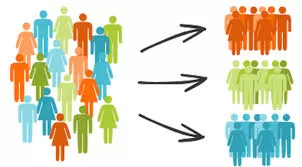
Audience segmentation is the process of dividing a broad audience into smaller groups based on shared characteristics such as demographics, location, behavior, or mindset.
The purpose is simple: to communicate more clearly and more effectively.
For example, a first-time website visitor and a past client should not see the same message. A newly engaged couple looking for a wedding photographer has very different needs from someone comparing photographers for a future event. Segmentation allows you to tailor your messaging based on these differences.
For local service businesses, audience segmentation plays a critical role in:
- Paid advertising
- Website messaging and landing pages
- Email and WhatsApp follow-ups
- Content and social media strategy
It moves your marketing from “broadcasting” to “relevance-driven communication.”
Why Audience Segmentation Matters in Marketing
Most businesses today are not short on data. The real challenge is using that data effectively.
Audience segmentation helps you convert raw data into better decisions—what message to show, when to show it, and to whom.
When segmentation is done well, businesses typically see:
- Higher engagement and response rates
- Lower cost per lead and cost per acquisition
- Better lead quality
- Stronger customer lifetime value
Modern consumers expect relevance. Generic messaging across ads, emails, or websites often gets ignored. Segmentation allows you to match your message to the customer’s stage, intent, and context.
For example:
- A clinic prospect researching symptoms needs education.
- A returning patient may be ready for a specific service or package.
- A warm lead who enquired but didn’t convert needs reassurance, not a generic ad.
- Segmentation helps you meet people where they are, not where you assume they are.
Types of Audience Segmentation (With Local Business Examples)
There is no single “best” way to segment an audience. Strong marketing strategies typically combine multiple segmentation types depending on goals and available data.
1. Demographic Segmentation
This is one of the most commonly used forms of segmentation. It groups people based on observable traits such as:
- Age
- Gender
- Income level
- Education
- Marital status
Local business example:
A wedding photographer may promote premium packages to higher-income couples while highlighting budget-friendly options to younger couples planning smaller weddings.
Demographics are easy to collect but should rarely be used alone.
2. Geographic Segmentation
Geographic segmentation groups people based on location-related factors such as:
- City or locality
- Region or state
- Urban vs suburban areas
- Climate or population density
Local business example:
A home services company may run different ads for apartment-heavy neighborhoods versus villa communities. A fitness studio may promote early-morning classes in residential areas and evening classes near office hubs.
For local service businesses, geography is often one of the most impactful segmentation layers.
3. Psychographic Segmentation
- Psychographic segmentation focuses on mindset rather than surface-level traits. It looks at:
- Values
- Lifestyle
- Interests
- Attitudes
- Motivations
Local business example:
An interior designer might highlight aesthetics and personalization for design-conscious clients, while emphasizing functionality and durability for families with children.
This type of segmentation helps answer why customers make decisions, not just who they are.
4. Behavioral Segmentation
Behavioral segmentation is based on how people interact with your business:
- Website visits
- Enquiry forms submitted
- Past purchases or bookings
- Engagement with ads or emails
- Frequency of usage
Local business example:
A clinic could send follow-up reminders to patients who haven’t booked a repeat visit, while offering upgrades or packages to regular patients.
A consultant could retarget website visitors who viewed pricing pages but didn’t enquire.
Behavioral data is often the most powerful because it reflects real intent.
5. Firmographic Segmentation (For B2B Services)
- Firmographic segmentation is primarily used for B2B service providers and includes:
- Company size
- Industry
- Revenue range
- Decision-maker role
- Business location
Local business example:
A marketing consultant may offer structured retainers to established businesses while positioning starter packages for solopreneurs or early-stage firms.
Firmographics help align your service offerings with business maturity and budget realities.
Final Thoughts: Segmentation Is a Strategy, Not a Tactic
Audience segmentation is not about creating more complexity—it’s about creating more clarity.
For local service businesses, segmentation helps:
- Attract better-fit leads
- Improve conversion rates
- Reduce marketing waste
- Build trust through relevance
The goal is not to talk to everyone. The goal is to talk clearly to the right people at the right time with the right message.
When segmentation becomes part of your core marketing strategy, your campaigns stop feeling forced—and start feeling intentional.